Executive Summary:
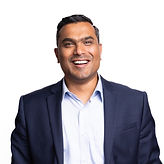
Join The Enterprise Edge founder and CEO Mark Vigoroso
as he sits down with Vignesh Subramanian, Infor's SVP of
Product Management overseeing AI, analytics,
automation, and platform strategy, for a wide-ranging
conversation that moves from the technical to the
operational to thepersonal. Learn why Infor has doubled down on industry-specific SaaS solutions while carefully navigating the hyperscaler game, how agentic AI is reshaping mission-critical enterprise workflows without triggering a "doomsday scenario" for the workforce, and why Subramanian, who's witnessed in his 25 years at Infor everything from the dot-com boom to the cloud revolution, believes AI's near-term promise lies in bridging humanity's labor shortage gap. Along the way, you'll discover Subramanian's unexpected side hustle as a reserve oboist in a chamber orchestra, his philosophy that "winning requires planning" learned from coaching youth cricket, and why he keeps a hand-painted calendar on his desk featuring sketches from his favorite South Indian composer. It's enterprise software strategy meets human insight - proof that the most compelling conversations about technology happen when you actively listen to the people behind the platforms. Stream it now, and be sure to LIKE, SHARE and COMMENT!
Transcript:
Mark Vigoroso (00:01.541)
Greetings all, welcome to another episode of the Enterprise Edge podcast. My name is Mark Vigoroso, founder and CEO of the Enterprise Edge. Excited to be with you once again for another episode of the Enterprise Edge. We have a distinguished guest with us as always. Vinyash Subramanian is joining us from Infor. He is Senior Vice President of Product Management, cutting across a lot of different areas of capabilities within the Infor.
portfolio, including AI, data, analytics, automation, user experience, platform as a service, EPM, and GRC. So he's got quite a breadth of responsibility and depth. At Infor, he's based out of the Netherlands. And without further ado, let's give Vignesh a proper welcome. Vignesh, thanks for being here.
Vignesh Subramanian (00:54.498)
Thank you so much, Mark. Glad to be here. Looking forward to the talk today.
Mark Vigoroso (00:57.679)
Great. Great. Great. Thanks for taking some time. So Vinesh, let's get started. We're going to do what we normally do for folks who are regular listeners. We have a bit of an icebreaker section to start off just to get warmed up and to learn a little bit more about Vinesh as a person and not just an executive. We'll talk about some pretty meaty issues with regards to where Infor is going, where the market is going around AI.
agentic AI, some other key areas of product strategy. And then we'll end with a speed round where we'll just have a few more lighter fun questions that will be entertaining as well as informative. So with that, Vinesh, let's start with your track record at Infor. You've been with the company for quite some time, 25 years, if I'm not mistaken.
So I guess two part question with that, number one is what has kept you at in for this long, obviously that long of a tenure is somewhat becoming more and more rare these days. Just curious what has kept you. And then the second part of the question is if you weren't in enterprise software, what would you be doing?
Vignesh Subramanian (02:18.498)
Great. So yeah, I joined Infor August of 2001, couple of weeks before 9-11 to be precise. So that's still fresh in my memory. What has kept me at Infor for so long? Essentially the constant technology innovation and being on the bleeding edge, right? So when I joined, it was the era of client servers transitioning into the e-commerce.
and the dot com era, that's when I joined Infor. And then I was part of the mobile revolution that came along. And then I got to participate on the move to the cloud of all the enterprise applications. So if you see my journey at Infor has driven through various phases of technological advancements.
which meant always we got to do the latest and the greatest stuff in the market. We could always be the pioneers in defining the direction for the industry. So it's never a dull moment, never felt the need to leave. It's a great company, great work ethic, great culture, great work-life balance. So just felt comfortable all along and I've stayed.
Mark Vigoroso (03:39.062)
That's great.
Vignesh Subramanian (03:40.468)
And to your other question, what would I be if I'm not working at INFO? Music is something that I, you know, that is my passion that I take very seriously. I play a couple of instruments. Nowadays, I'm playing the oboe, which is a double-reed instrument, which is a very relatively special instrument. So if I'm not working at INFO, probably I would be playing oboe in some orchestra.
Mark Vigoroso (04:09.017)
I love that. I love that. You'd be in some symphony orchestra somewhere, first chair. That's great. That's great.
Vignesh Subramanian (04:14.786)
Yes. Yeah, I actually auditioned for a chamber orchestra recently and I'm currently a Reservo Boist there. So that's something I do aside my work.
Mark Vigoroso (04:23.999)
that's great.
Well, maybe that can be your second career. That's great. Well, I've also done a little bit of research on you. And if my sources are correct, I believe you've spent some time as a youth cricket coach. And I've done some youth sports coaching myself. I've coached soccer, young kids and...
I know how I would answer this question, but I'm going to ask you is what lessons from your time as a youth cricket coach have been valuable in your professional life?
Vignesh Subramanian (05:03.618)
Hmm. Yeah, I was a cricket coach when my son was playing cricket. And actually, I got to coach at a pretty high level as well. What lessons did I learn from my coaching experience? That winning requires planning. It's a very good philosophy because, you know, I was the coach for a bunch of teenagers.
Mark Vigoroso (05:08.101)
.
Mark Vigoroso (05:21.253)
Hmm.
Vignesh Subramanian (05:30.636)
and cricket is relatively speaking a lengthier game. We play 40 hours in innings in the U17 league. So that's like three hours is one half of the game, then we have lunch and then there is three more hours in the second session. And if you don't have a game plan to last through the six hours.
And if you are playing tactically for something that gives you a moment of joy or just want to show off or do something not so sound, then you run the risk of folding much earlier and not lasting the whole game. So then you need a plan saying each and every person is given a role. They have to stick to their role apart from playing too much of their own.
preferences that they may have. Of course, on a given match specific condition, they need to bring their own individual abilities to the foray. But by and large, you need planning to win. I would say that's a simple takeaway.
Mark Vigoroso (06:31.813)
That's right.
Mark Vigoroso (06:35.545)
Yeah, I would agree. I've heard it said, failing to plan is planning to fail, right? And that's exactly right. Exactly right. All right, third and final. Netherlands. The Netherlands, this is where you're based. And I believe you're also quite fluent, almost fluent in the Dutch language. Yes, so I'm curious.
Vignesh Subramanian (06:42.69)
Good one. Yeah.
Yeah.
Vignesh Subramanian (06:58.55)
I can manage the languages.
Mark Vigoroso (07:03.513)
For those of us that might be future visitors to Amsterdam, is there a coffee shop or a restaurant or a neighborhood or some area of Amsterdam or maybe any area in the Netherlands with which you are familiar that you would recommend to folks who are seeking sort of an authentic non-touristy Dutch experience?
Vignesh Subramanian (07:27.448)
Well, the coffee shop in Amsterdam means something else, but... But yes, mean, Amsterdam is one of the most touristy cities. It's very busy and, you know, it's to some extent a victim of its own success with respect to over tourism, they say. So definitely there are some neighborhoods in the city which are not touristy, primarily residential neighborhood.
Mark Vigoroso (07:31.811)
Yes, it does.
Vignesh Subramanian (07:55.534)
built in a colonial style. You have a neighborhoods like Beguinehof, there are botanical gardens like Hortus botanicus that's not, you know, well sought out tourist destinations, but
where locals normally go. Also the northern part of Amsterdam, so from the central station of Amsterdam you take a ferry which is provided for free by the government to reach the northern part of Amsterdam. That's also pretty common and different. And I would say just step out of Amsterdam and visit nearby towns which are equally as impressive but
not even nearly half the crowd. There are very good cities like Utrecht, which is nearby. There are other comparable cities like Delft, which is also very picturesque. And Harlem is also a very nice city close by. So I would say, stepping out of Amsterdam to explore the other cities nearby could be also a great tip.
Mark Vigoroso (09:00.501)
That's great. That's great advice. Great advice. I love the Netherlands and I know I'll be back. So I'm going to go back to the transcript and I'm going to take notes on what you just recommended. So thank you for that. Well, great. Thank you for that. It's good to realize you are a true Renaissance man.
Vignesh Subramanian (09:14.102)
Thanks.
Vignesh Subramanian (09:21.134)
Okay, music and Amsterdam and everything, yes.
Mark Vigoroso (09:27.973)
Well, let's get down to some of the business at hand and some of the work that you're devoting yourself to these days in your role in product at Infor. You know, this first question is about sort of this balance between verticalization and generalization, right? So if you think about the world of AI and agentic AI,
One of the promises on the surface of AI models is that, you know, specifically agentic or autonomous, you know, AI models where you've got the ability to learn and adapt and generalize learnings and apply learnings appropriately and situationally. that's sort of premise number one. And I guess the question then is.
I believe in for is building, spending a lot of time looking at the industry verticals that you've always looked at, right? You've always had a very, very good and strong discipline with regards to which verticals you're tackling around manufacturing and some other related industrial verticals. And my question is, have you all come to any conclusions on...
whether the right way to approach agentic capability development is in sort of a hyper specialized way. In other words, applying process knowledge and domain knowledge by industry and effectively building these autonomous workflows in the context of very specific verticalized use cases or
Is there a role for more horizontal generalized approaches to building these sort of algorithms that will be either semi or fully autonomous and self-learning that cut across more than one sort of very verticalized use case or set of use cases? Or is there a sort of a hybrid between those two and there's a role for both if you catch. So long way of asking that, but you follow kind of what I'm, what I'm trying to get at.
Vignesh Subramanian (11:47.5)
Yes, I completely got the question. So basically you are saying, are you negating the advantage of the inherent analytical and intelligent capabilities of the AI systems by building domain specific agents? So in other words, the industry context beats the algorithmic sophistication in a way, right? That's the question. Yeah, I would say it's both. It's not an
either our discussion, it's an and-and discussion. Let me explain. What AI needs to perform better is the context. More relevant context that the AI models have, better planning, execution, and results that you get. I mean, can look at, in the industry parlance, all the enhancement techniques.
that we have for example as concept of rag retrieval augmentative retrieval based augmentation right so that's basically modifying the input as rich as possible so as to get good output so in other words of model just doing its own thing even before approaching the model for an answer you are making the prompt so rich
and as specific as possible, as relevant as possible with respect to all the context it needs. And then you ask the question, obviously the answer you are going to get is of much higher quality. So that's where the concept of prompt engineering and everything also comes into play. So if we have an industry specific use case, providing all the industry specific context upfront is going to make
the response that much more accurate and richer with less chances of painting with broader strokes or hallucinations on the response side. Rag is one technique I mentioned. There are other techniques like distillation that even is going to the same philosophy that, of course, the model is capable of handling anything you throw at it, but is that necessary? Is that prudent? Why don't you make the model narrow its scope
Vignesh Subramanian (14:14.4)
and help the model look for answers within the guardrails and within the scope that you give, then the model performs that much more better. So in other words, providing all the industry specific knowledge we have upfront as input to the models complements its algorithmic sophistication. So I would say that the answer is best of both worlds.
Mark Vigoroso (14:37.189)
you
Mark Vigoroso (14:41.945)
Yeah, yeah, that's what kind of what I would expect. think that's true. There's very, very little that is black and white, right? There's a lot of gray and I think that applies to a lot of enterprise software companies out there, ERP and otherwise, that are making strong bets.
to be really industry specialized and they're acquiring domain expertise and they're acquiring and building very, very specific industry use cases. And I think regardless, AI or not AI, there's tremendous value in solving for those pain points and use cases.
As required by those industry requirements, right and that doesn't necessarily mean that you can That you need to like you said fully abandoned sort of horizontal cases that might cut across functional areas or domain areas and like many things ends up being sort of this matrix of agents that need to be orchestrated right and situationally aware right they sort of have to be aware of
the situation in which they've been deployed as though they were a digital laborer, right? A digital worker, right? So interesting. sort of bleeds into the next question, Vinesh. I, you know, I was thinking about this one. It's sort of the reality. It's a reality check, right? Where there's some data out there that says that there are...
More than three quarters of C level executives will, will agree with you that there is value to be gained. Business value, incremental business value to be gained from advanced and emerging tech, whether that's AI quantum, whatever it is. Right now, the way I would summarize this is that a lot of those folks are
Mark Vigoroso (16:56.587)
intellectually convinced, but operationally paralyzed. What that basically means is that logically they follow the case, the business case, the justification, the opportunity statement, right? Even a little bit of the baseline sort of current state analysis, but the reason for the paralysis operationally,
There's many, many fold, lots and lots of different reasons for barriers for migration and modernization and transformation. And I guess my question for you is my understanding is that Infor has actually tackling this head on. They're actually built an offer. It's called Infor Leap. And it's around this notion that there are real barriers that companies are facing that prevent them from capturing
the potential value from whatever the digital transformation initiative is, whether that's AI or just simply cloud application, whatever it is, right? And so I guess my question for you is what have you learned about this? You could call it sort of this chasm between conscious agreement, but operational paralysis, right? And what have you learned through that and how have you navigated it? What does InfoLeap do to help companies?
cross that chasm so to speak? Tell us about that.
Vignesh Subramanian (18:26.51)
So InforLeap is essentially a program to move our customers who are running the on-prem version of Infor software to move them to the multi-tenant SaaS cloud of Infor. That's essentially the offering. The biggest challenge to your point that our customers are currently facing are twofold. Number one, they start customizing
their current on-premise architecture so much so that they get tied to their present state forever. And the new innovations and the new advancements that come on the subsequent versions, they are not able to consume that because how far they have deviated from the standard and made that version one of their own, right? That was the advantage of the perpetual model of running
software on premises because most enterprise software platforms have very good extensibility and customization framework and if the way your business is run or the way how the culture of your company is instead of modifying your business according to the standard process in the software usually given a chance customers modify the software to adapt to their business process right so it's
So that was rampant in the optimized world. So the customization becomes so heavy to a point that they are unable to accept or absorb the new innovations and new offerings, which anchors them to where they are, leaving them behind and unable to take all the advantage. That's, let's say the issue number one or the challenge number one. Challenge number two is the changing business needs. Frankly,
you know, everything runs with mobile, with modern terms and conditions and demands of the consumer, which requires, for example, in distributions, you may need omni-channel distribution, meaning customer can order stuff online, but if they don't like it, they would like to return it to a physical store. So your software should be able to cater to these type of emerging needs. So it's a genuine
Vignesh Subramanian (20:53.358)
necessity that they need to run a modern stack that supports all these emerging business needs. So you put together these two challenges and that's the primary driver for our customers to, let's say, go through this digital transformation and move to the cloud. Right? Having said that, you asked the question, customers want to adopt AI and so on. There I would like to probably share a viewpoint. Customers don't care so much about the technology as much.
Mark Vigoroso (21:11.311)
Hmm.
Vignesh Subramanian (21:23.488)
as they care about the outcome. What we want is better profits, better cashflow, lesser inventory, right? Faster resolution time for an incoming service ticket, right? That is what they need. And the modern technologies like AI is a means to that end. And there is value that using an advanced technology like AI or mobile first,
Mark Vigoroso (21:38.159)
Mm-hmm.
Vignesh Subramanian (21:52.642)
or API modernization or what have you, helps them achieve those business KPIs, then it is a no-brainer or the discussion is much easier that they move to the cloud, right? So I think that is how you can explain that chasm that if they want to do something, but there is something else holding them back where they are. So at some point they have to break free. They have to change the culture. They have to accept.
that they will modify their business practices to the industry best practice, which is already configured in the software, not as much reinvent the wheel themselves just because they can. So they need to let go of that that mind shift is required. That's number one. Number two, obviously the business value should be proven and should be there crystal clear for them to realize. And then that move, know, that gap, what you mentioned will disappear on its own.
Mark Vigoroso (22:52.677)
Yeah, that's a great point, Vignesh, about outcomes. In fact, we could probably have a whole discussion about how the consumption of enterprise software is quickly moving towards outcome-driven models, right? And consumption-driven models. And there's a lot going in that space that certainly don't have a ton of time today to get into that, but it's a very good point. It's almost like the sheen is starting to...
to rub off of just the AI. other words, people just saying, and boards of directors saying, just make an investment in AI, it doesn't matter what it is. We need to be on the bandwagon, right? And that certainly does not pay off the way it needs to, right? As you can see in a lot of the studies that came out from MIT on that, but it's a very good point around outcomes no matter what. It doesn't matter what's under the covers in a way. I'm looking for profit expansion, I'm looking for growth expansion, I'm looking for...
cashflow. I'm looking for all the things you just mentioned. so let's talk about before we get into our speed round, Vignesh, another hot topic in the area of ERP and, and more generally speaking, enterprise apps. And that is the role of the human versus the digital workforce, right? As agentic AI matures and as those agents proliferate.
Vignesh Subramanian (24:19.424)
I know where this is going. Yeah, OK. Yeah, OK.
Mark Vigoroso (24:21.997)
Yeah, yeah, you know, it's it's it's there's a lot of trial and error that I see going on with regards to what people call human in the loop processes where you have certain amount of autonomy and a certain amount of human intervention happening human approvals human let's call it approval gates if you will built into new processes where you may have an agent
performing certain tasks up to a point and then it has to go through some sort of approval by a human. And there's this question that is there sort of, I guess, a contradiction or is there an inevitable outcome where you have the more and more agents that you have, the more and more semi-autonomous workflows happening, does that mean you need more and more
human approval or at least at an equivalent level of human approval, does that, you know, is that, is that working at cross purposes? Is there actually a fully autonomous or maybe a microcosm of a fully autonomous enterprise that's, that's, that's, that's, that's in the realm of reality, right? Where you may have certain procedures, certain workflows, maybe administrative in nature.
that are fully autonomous and do not require any human intervention. And maybe that happens over time. I don't know if that happens on day one or day 101. The question though is what are your customers, how are they behaving with regards to what they're willing to allow or even consider an agent to perform either fully or partially? And then maybe there's some areas that
will never be performed fully or partially by an agent. Are those lines being drawn by your customers as we speak? How are they thinking about that?
Vignesh Subramanian (26:29.25)
Yeah, this is exactly where I envisioned the question is going as well. So first of all, we need to qualify the term agent a little bit. It's not necessarily a new term. We have had agents for a while now. For example, an RPA agent.
Mark Vigoroso (26:33.326)
Yeah.
Mark Vigoroso (26:39.727)
Yeah.
Vignesh Subramanian (26:45.964)
which is carrying out some form of a front-end automation or integration agent, which is automating some sort of a B2B backend system communications and data exchanges. These agents have existed all along and you have the new age agents, which are, let's say, generative AI and LLM based that have a different architecture where they really
tend to accept any open-ended question, analyze what that question means, and come with a plan and then execution. They have memory. And when the response comes, they have ways of self-evaluating and measuring the quality of the output. And as developers, you also can modify the behavior of these agents by incentivizing correct behavior.
and know, punishing the poor results and so on. So that is the new world of agents. So when we say agents, you know, normally in this conversation, I think you mean the new age agents, which are autonomous and thinking for themselves, right? Here, if you look at the level of acceptance or the level of trust this system has, I think it's still, to be honest, very early days.
Mark Vigoroso (27:56.026)
Yes.
Mark Vigoroso (27:59.376)
Yes, that's right.
Vignesh Subramanian (28:13.004)
And let's not forget the world of enterprise software runs a lot of mission critical businesses. It's very different than an individual browsing the internet and consuming this technology to find out a business trip they are making or a tourist itinerary they need or a recipe for cooking they need or a planning help they need or write an email, et cetera.
different type of use case compared to employing agents on a mission critical business scenarios. We are talking about fulfilling payments on a finance domain. The last thing you want to do is pay out a vendor with an additional zero in the invoice amount. You would never want to do that. Right? Or some of our customers run their manufacturing, be it let's say defense equipment, which requires highest of the safety standards or
a food and beverage company where the recipe is determined by the recipe optimization and the mixes determined in the software. You don't want to take chances on that. So where I'm going with that is that the existing agents which are deterministic, which are predefined, which are hard-coded, they are reliable every single time. If you ask the same question 100 times, they will give you the same
as compared to this new agents where they are more probabilistic and they are more, let's say, analytical. I can probably explain that with one more dimension. The world where we come from is very black and white, that you have data that's typically stored in a database or in a file system, et cetera.
And then you have instructions that operate on the data like create something or update something, whatever it is. And that instructions, there is no second guessing there. It's a fixed manual, either a piece of code or a visual diagram. Every single possibility that can happen in that instruction is laid out. There is no blind spot. If there's a blind spot, it's a bug that needs to be fixed. But
Vignesh Subramanian (30:37.026)
The world where we come from has a very clear black and white boundaries between data and the instructions. New world of agents, the data is where it is, but the instructions are not predetermined and black and white. The instructions are built on the fly by this agentic system. And unless or until it is able to provide the same guarantee of dealing with that data in mission critical operations,
you will never have an autonomous system running mission critical processes all by its own. I'm not saying it's impossible. I'm saying that level of trust and certainty needs to evolve for that to happen. And as we speak, it is happening. We are not yet there. However, a lot of use cases where the agent can aid a physical employee in their day-to-day life,
Mark Vigoroso (31:12.901)
Right.
Vignesh Subramanian (31:35.468)
They need not know everything upfront. That's where we take out the tribal knowledge of an experienced employee out of the equation, where knowledge becomes a commodity and this agent can provide all the knowledge on the fly to the physical employee. A lot of data consumption use cases like generator report or find the status of something. These are relatively harmless use cases where the agents can play much larger role.
Let's say again, there are use cases like for example, customer service where the agents can give you more context on the fly compared to you having to do it manually. Like if there is an incoming request, the agent can already analyze, has there been a similar incident in the past? How did we solve it, et cetera, and then can equip the real employee with superior level of knowledge with a short period of time to be able to handle.
what they need to do. I think all these use cases agents are offering a turn off value today. I think those are the areas where the value is unquestionable and it's already changing the lives of enterprise workforce significantly. But to your question of will the agents go on to become completely autonomous? Yes, for less mission critical operations today they already can, but for really critical use cases, I think it's still a matter of at least
Mark Vigoroso (32:50.553)
Yeah.
Mark Vigoroso (32:57.571)
Yeah.
Vignesh Subramanian (33:04.843)
I would say two to three years, if not more, before we have those mission critical operations also fully autonomously executed through agents. Or maybe for safety reasons, you always need a human in the loop for certain type of use cases, and we should never compromise that, depending on the requirements.
Mark Vigoroso (33:09.625)
Yeah.
Mark Vigoroso (33:23.215)
Yeah.
Yeah, seems to me that that's great. It's a great answer. mean, it seems to me that there are these certain criteria that are emerging as companies evaluate where, when, and why to fully not just automate, sort of.
agentic AI automate right to effectively build some autonomy into and self self-learning self-correcting Self-governing in a way and it has to do like you said criticality and risk exposure You know, what's the downside risk? complexity repeatability right variability, you know, it's almost like some of the similar criteria that was used back in the days of RPA like you said, which is more deterministic, but
But it's sort of similar, right? You don't, if the stakes are really, really high and a mistake will cost you a lot of money or a lot of exposure or a lot of negative PR or a lot of customer, right? Then obviously you tread very carefully. So I think a lot of the decision frameworks that have been used in the past and various earlier generations of automation are still valid to some degree, right? And yeah.
Vignesh Subramanian (34:40.206)
Absolutely. think those are here to stay. There is no need to change all the rule-based, low value, high volume use cases to refactor them as agentic use cases. You never would want to do that. The existing automation frameworks are still required. They are still probably going to fulfill 90 % of your run-of-the-mill use cases and probably agents should be used for this really.
high value analytical complex problems is where they can play the role of augmenting the human workforce for sure today and go on to become autonomous over the years.
Mark Vigoroso (35:20.261)
That's great, that's great. Good times, great Vignesh, thank you for your perspectives. Like I said, I probably have enough for another three podcasts, but let's pause there. We're gonna dismount here with a speed round, have a little bit of fun before we let you get back to the end of your day there in the Netherlands. Speaking of which.
Vignesh Subramanian (35:29.048)
Thank
Mark Vigoroso (35:43.91)
You travel quite a bit, I know you a little bit, Vignesh. You work across continents and time zones and oceans and you just shared with me earlier that you're more of a night owl than a morning person, but give us a glimpse into like, is your, do you have a typical routine during your work day, either at the beginning, middle or end? You're not a morning person, I'm not a morning person, but do you have an evening routine or maybe an after dinner routine?
to get yourself energized and recharged and focused throughout what is probably a very long work day.
Vignesh Subramanian (36:16.95)
Yeah, yeah. I with respect to the time zones, the Europeans have hit the lottery, right? It's a correct sweet spot to work together with both Asia and across the Atlantic in the Americas. But that also means our work days are longer because we are in the sweet spot for both directions of the map. So yeah, we have a very large team in Hyderabad in India, and we have a very large team in...
Mark Vigoroso (36:33.615)
Yep.
Vignesh Subramanian (36:46.51)
So that means very actively I work with both the teams on a daily basis. Typically I start my work day at around nine o'clock. And let's say when the US wakes up around one, two o'clock, my time in the afternoon, which is typically 8 a.m. Eastern, I think that's when my afternoons are much, much more busier than my mornings because of that reason. And normally I'm flexible, I'm working until
let's say seven or eight o'clock in the evening. So normally I have a eight to eight schedule, let's say not continuously, but roughly that's my schedule, what it looks like. But as you said, you know, after dinner is when it's me time that comes into play because I have a lot of other interests like music. So then it's usually after dinner that I'm spending time on music or catching up with watching TV with family and so on. So yeah, nothing really.
special about routine. I'm more a mood driven person. Like I don't have very strong, you know, time bound discipline, which is something I need to get better at. But that works for me. I mean, it helps me to do things at my own pace and I don't pressurize myself to do some things at certain times, certain hour of the day. So that gives me that mental freedom, let's say.
Mark Vigoroso (38:17.027)
I love it. I love that. I love that. Okay, next one. In let's just say five years time, it's hard to predict these days, but in five years time, how do you see the evolution of the CXOs if you genericize sort of the executive, the companies that are typically your customers, the leaders of your customers? Do you see that role?
or how do you see that role evolving when it comes to management, right? Managing, certainly there are humans, there are workers, there are FTEs, there are 1099s, there are people, but there are also going to be more digital workers, if you will, agents performing workflows, and it's that intersection that we just talked about between humans and agents. Is there a skill set?
that's going to evolve? Is there going to be any sort of, you think, not upgrade, but evolution in how these managers, even non-technical managers, right, finance, operations, manufacturing, right, in terms of how they think about labor and how they manage cost of labor and performance of labor and quality of labor. Do you have an opinion on that one, Vinesh?
Vignesh Subramanian (39:42.666)
Yeah, definitely. I would like to see it a bit positively because even in my own line of work, as well as in all the customers' conversation that I have, a common theme that comes up is the labor shortage. You also know with the population trends in the Western societies gradually declining and...
If you look at the labor shortage for essential services, there is always need for more teachers, more nurses, and more essential workers and so on. So if anything, AI will certainly help bridging that human potential gap that the humanity as a whole is looking for. The demand is higher than the supply. That's my point. AI definitely has a role to play there.
Going back to an enterprise context, there are certain highly repeatable jobs where I do expect AI to make an impact. For example, if you are a pure data entry operator or just doing, let's say translation work or in content creation domain, these are some of the areas where
AI has a bigger impact, let's say, directly. But there are many, many other areas where, going back to the discussion we had for the mission critical scenarios, you're going to need people. You're always going to need to grow with the help of AI. So it's not that AI is going to end up replacing half of your workforce, but your business grows so much that your existing workforce
can go on to do the high value tasks, innovative tasks, analytical tasks, and the agents can then supplement all the new demand of labor. I do expect that the distribution of workforce will be different going forward, but I don't really expect a doomsday scenario of AI replacing a lot of workforce.
Mark Vigoroso (41:49.966)
Mm-hmm.
Mark Vigoroso (42:07.374)
Yeah.
Yeah, me too. I think that's right. I think that's Um, a couple more of, and yes, you, um, you've seen a lot in your 25 years within four, I know, and you've been through a lot of permutations of disruption and innovation. And I'm curious. You've, you know, you've observed, I don't know, maybe thousands of customers go through evaluations, right? Figuring out, making a decision, either four in four or.
Not for in four or maybe not now, maybe later you've seen all that. And I'm curious, you know, in, the landscape of ERP and enterprise apps, are there questions that prospects and customers should be asking that very few of them are actually asking whether that's
whether that's comparing Infor to a direct competitor or they're not actually getting to the heart of what makes Infor different and unique. what would you, how would you coach a prospective customer or a buyer in terms of, of, know, maybe a question or an area of questioning that they're just not getting to the heart of.
Vignesh Subramanian (43:26.454)
Yeah. Very good question. So I think I can define Infor's DNA in certain parameters, and those also, in a way, answers your question. So what is Infor? We are a industry-specific SaaS company. So we are not catering for all industries. We have made our choice to serve three major industries, and that is
manufacturing, both discrete manufacturing and process manufacturing, distribution and healthcare and services. This is our focus. If you are a business that are not squarely falling in these verticals, obviously we are not a good fit for you. On the other hand,
If you are in these domains, then we go to the next level. If you are in manufacturing, what type of manufacturer are you? Are you manufacturing cars or are you manufacturing planes? Both are completely different ballgames, right? If you are manufacturing cars, are you manufacturing a mass utilization car which everybody buys or are you manufacturing a luxury car with a very targeted segment, right? I think...
That basic, as basic as it sounds, that discovery lends itself on why you should choose Infor. We not only specialize on these industries that I mentioned, we also specify in micro verticals within each of these main vertical. Like for instance, if you're talking about the process manufacturing industry, are you a food and beverage company or are you a chemicals company, for example? Right?
So then we go more and more into these qualification of your business then it's obvious where we are strong. We have consistently been ranked number one on the enterprise software magic quadrant by Gartner for distribution and manufacturing enterprise software. We have a very strong presence in the healthcare industry.
Vignesh Subramanian (45:40.116)
as well, mainly the financial supply chain management and HRT and workforce management. So then, that's number one. Number two is obviously nowadays, it applies to everybody that everybody is running in the SaaS cloud. But some of our competitors also play the infrastructure game. They also own the cloud. It's a complete vertical. But Infor made a very clear choice of not getting into the hyperscalar game.
but we partnered with AWS way back in 2013, 2014 timeframe. know, AWS is the market leader on the enterprise cloud. And, you know, that again is a differentiator for us because we derive all the innovations that they bring in their cloud by virtue of being a AWS only cloud based.
ISV and we tend to focus on making our enterprise software really world class. So we are very clear what our focus is and where we are spending our energy. And if you are a customer where this message resonates and there is no reason why you should be looking at anyone else than Infor.
Mark Vigoroso (46:49.167)
That's very good clarity. I appreciate that. That'll be very helpful to our community. Last question and we'll let you go. We'll catch you next time. Is there anything on your desk that would surprise people? A trinket, a chotsky, an oboe?
Vignesh Subramanian (47:00.418)
So.
Vignesh Subramanian (47:09.71)
Well, I'm a clutter-free person. Okay, what is on my desk? I still use a classic calendar for taking the date. And this is a custom-made calendar by a friend who is an artist. He's not a professional artist, but he's a pencil sketch artist. And he makes cards that are based on themes of popular South Indian music director who I follow called...
Mark Vigoroso (47:38.218)
Vignesh Subramanian (47:38.986)
Ilai Raja is my favorite composer and all the month photos are iconic images from his popular soundtracks. This is for December now and so on. So yeah, I still use a classical calendar and this is a custom made hand painted calendar that I have which is probably the only unique thing I've been followed.
Mark Vigoroso (47:48.997)
Huh?
Mark Vigoroso (48:02.117)
That's beautiful, that's beautiful That's beautiful. Don't just from just from my vantage that that looks like he's got quite a bit of talent. That's that's beautiful Well, yes, has been tremendous, you know, like I said, I think we could go on for a lot longer But this is this is gonna have to do for now We'll make sure to have you back on we'll stay in touch and we'll be tracking in for
Vignesh Subramanian (48:13.09)
Yeah, great.
Mark Vigoroso (48:29.733)
as we move into 2026. So with that, Vinesh, thank you for your generosity and your candor and your insights and your attention. Thank you everybody who's listened once again. Wishing everybody a happy holiday season around the world. It's a very busy time, but hopefully people will have some time to refresh and recharge as we get ready for 2026. So with that.
This is Mark Vigoroso signing off for the Enterprise Edge, and we will catch you next time. Take care, everybody.
Vignesh Subramanian (49:00.654)
Thank you.